Mt. Croghan is one of the three oldest towns in Chesterfield County, along with Cheraw and Chesterfield. The name of the hill around which the town was built dates back to 1780 and the Battle of Camden during the Revolutionary War.
According to local history, Major Croan, a French officer known for his service during the Revolutionary War, camped on a hill overlooking the present-day town while traveling toward Virginia after the Battle of Camden. The hill became known as Mount Croghan, and the community that developed there adopted the name. By 1809, Mt. Croghan had established both a voting precinct and a post office.
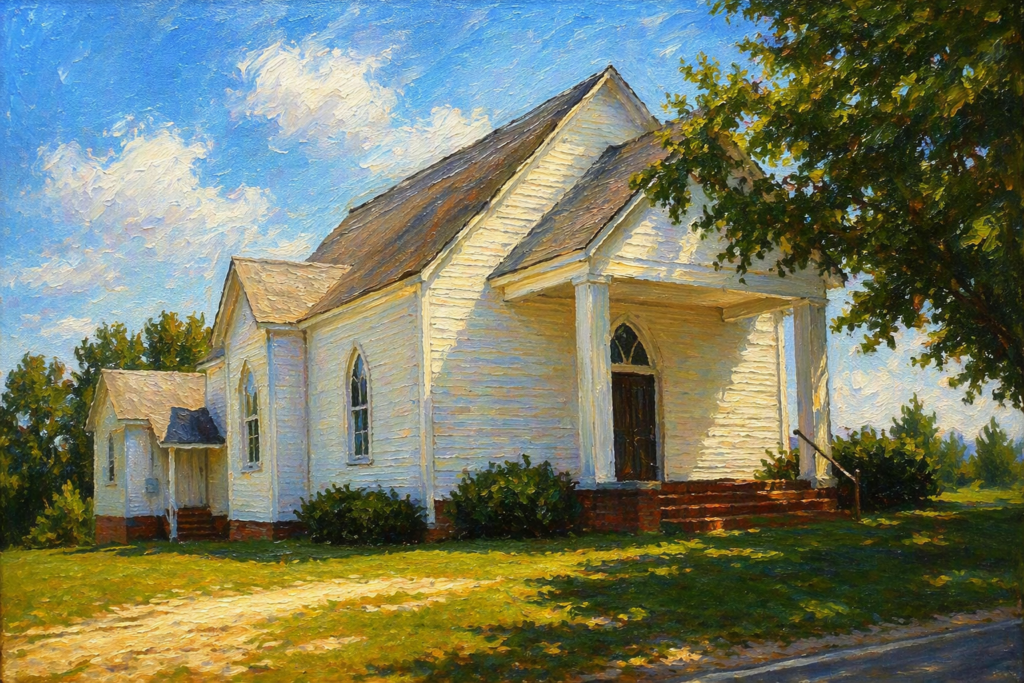
Another important landmark in the community is Elizabeth Baptist Church. The church was constituted in 1825 by Elders Joel Gulledge and Samuel Timmons. Its cemetery is recognized as one of the oldest in Chesterfield County and remains an important part of the town’s heritage.
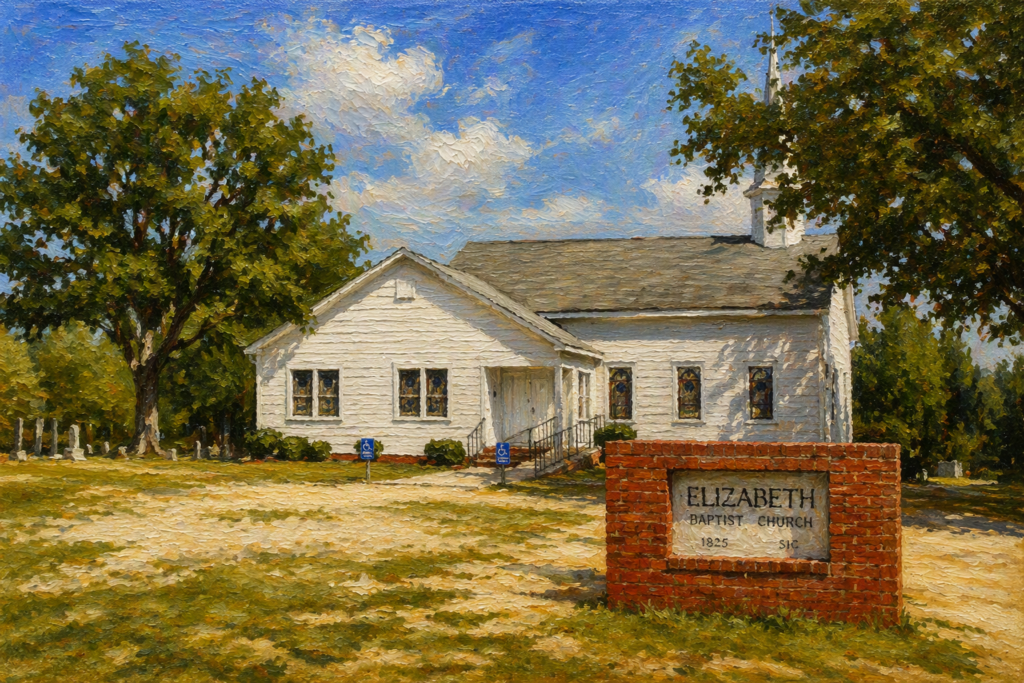
Pictured above is Elizabeth Baptist Church
In 1836, residents of Mt. Croghan recognized the importance of education and began efforts to establish a school for the children of the community. At that time, academies served as an important form of advanced education, and local citizens united to create what became known as the Mount Croghan Academy.
Mary Burch donated the land for the school, which was built approximately one mile north of Mt. Croghan near the old Elizabeth Church. Community leaders including Joseph Burch, Stephen Jackson, John Huntley, Sandy May, Joel Baker, and Samuel Timmons contributed their time, labor, and materials to make the project possible.
When the Academy opened, it was the only school within a twenty-mile radius. Alexander Whitton served as the school’s first teacher. Over time, the Academy became one of the most important educational and social centers in the area. Considered comparable to a high school, it provided opportunities that helped many students become among the best-educated citizens in Chesterfield County.
During the Civil War, Mt. Croghan suffered significant destruction when Union forces moved through the region. Much of the town’s recorded history was lost, including many historical documents and records. The Academy itself was destroyed during the war, marking the end of an important chapter in the community’s educational history.
Although the original Mount Croghan Academy no longer exists, its legacy remains an important part of the town’s history and reflects the community’s longstanding commitment to education and civic involvement.
Growth and Development of Mt. Croghan
In the early 1900s, Mt. Croghan was a thriving agricultural community with eight to ten stores serving local residents. The Chesterfield and Lancaster Railroad, which ran south of town, provided an important means of transporting farm products and merchandise, contributing to the town’s growth and economic development.
The Mt. Croghan Methodist Church was built in 1907 and continues to stand on its original site today. The congregation originated from Antioch Church on the Hornsboro Road, which no longer exists.
Mt. Croghan Methodist Church
Mt. Croghan Baptist Church traces its roots to Elizabeth Baptist Church. The congregation initially met in the local school until its church building was completed in 1922.
On October 3, 1911, a group of local citizens petitioned for a Charter of Incorporation for the Town of Mt. Croghan. At the time, the town had a population of approximately 150 residents. The charter was granted by Secretary of State R. M. McCown and officially recorded on May 28, 1914.
Education remained a priority for the community. In 1912, citizens constructed a new school, reflecting their belief in the importance of learning and personal growth. The school became an important institution for local families and future generations.
Like many communities across the nation, Mt. Croghan was affected by the Great Depression, which began in the late 1920s and continued through much of the 1930s. During this period, the Mt. Croghan Bank, once considered one of the strongest banks in Chesterfield County, was forced to close.
One of the town’s most notable achievements during the Depression era was the construction of the Mt. Croghan School gymnasium in 1932 and 1933. Built from white stone gathered and hauled by local citizens, the project became the first government-funded project of its kind in South Carolina to receive approval from President Franklin D. Roosevelt.
On September 3, 1931, a devastating fire destroyed an entire block of downtown businesses, including several mercantile establishments and vacant storefronts. Although rebuilding efforts followed, the town never fully regained the commercial prominence it once enjoyed.
Beginning in the 1950s, Mt. Croghan experienced a gradual decline in population as industry expanded in neighboring communities and agriculture became less central to the local economy.